After Six, Before Assumptions: A Reasonable Promise About the Evening Email
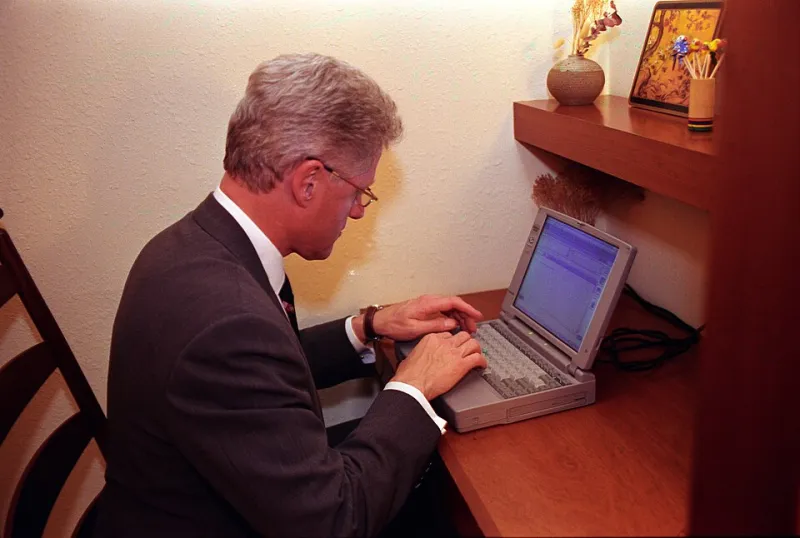
Photo: William J. Clinton Presidential Library & Museum, Public domain, via Wikimedia Commons
There is a particular sort of message that arrives at nine in the evening. It is seldom an emergency. More often it is a thought that surfaced after the washing-up, a question that has been turning over since a meeting earlier in the week, or a document found at last at the back of a drawer. The sender is not being unreasonable. They are being human, and the hour happens to be theirs.
For a family-run professional practice, that message arrives somewhere between the office and the kitchen table. Firms of our size have never enjoyed a clean line between the two. That is part of the appeal of dealing with a family business, and part of its difficulty. The question for 2026 is not whether clients will write outside office hours. They will. The question is what a firm should promise in return, and how it should say so.
The promise worth making
The temptation, when a firm first thinks about this, is to make a large promise because a large promise sounds like good service. We answer every email within two hours. We are always reachable. Nothing waits until Monday.
These promises are easy to advertise and hard to keep. They also teach clients something the firm did not intend: that the boundary is negotiable, and that a quiet reply at eleven at night is the normal standard. The first time a reply is slower, the client is not merely inconvenienced. They are puzzled, because the rule they learned has been broken.
A better promise is smaller and more honest. It says: we read what you send, we will acknowledge it, and we will tell you when you can expect a substantive answer. That is a promise a firm can keep in a busy week and a quiet one. It respects the client's concern without pretending that professional judgement can be produced on demand at any hour.
Urgent and routine are different words
Much of the anxiety around out-of-hours contact comes from a failure to distinguish two categories.
Routine matters are the great majority: a question about a document, a request for a copy, a change of address, a thought about next year. These can wait for the next working day, and saying so is not a rebuff. It is a description of how careful work is done.
Genuine urgency is narrower than it feels at nine in the evening. It usually involves a deadline that cannot move, a document that must be signed or filed, or a situation in which a day's delay would cause real loss. A firm should say plainly which channel to use for that, almost always the telephone, and what will happen when someone rings it.
Publishing that distinction is a kindness. It spares the client from guessing, and it spares the firm from being judged against a standard nobody ever agreed.
The fortress problem
The opposite mistake is to build a fortress. The automated reply that warns against chasing. The portal that requires a password reset at the very moment a client is worried. The ticket number issued to a bereaved son. These systems are designed to protect the firm's time, and they do, but they also teach the client that they are a case rather than a person.
A family firm cannot easily afford that impression. Its standing rests on the sense that a named person is behind the work. Technology can support that sense or erode it, and the difference is usually in the wording. An acknowledgement that says who is reading, when they will reply, and how to reach a person in the meantime costs nothing and sounds like a firm rather than a queue.
A published rhythm
What we would recommend, and what we try to practise, is a published rhythm of response. It need not be elaborate. It might say that messages received during the working day are acknowledged the same day and answered within one working day where possible, that messages received in the evening are picked up the next working morning, and that anything genuinely urgent should be telephoned rather than emailed.
The rhythm should appear in the engagement letter, on the website, and in the automatic acknowledgement. It should be repeated by the person who handles the first conversation, because a client who has heard it once from a human being is far less likely to test it at midnight.
The rhythm should also be reviewed. In 2026 many clients work shifts, run businesses that trade at odd hours, or live abroad. A firm that once closed at five may find that a slightly longer window, or a named deputy for a particular client, is the more honest arrangement. The point is not rigidity. The point is that the arrangement is stated, understood and kept.
What a firm may ask in return
A published rhythm is a two-way agreement, and it is reasonable to ask a few things of clients. Put the matter in the subject line. Send one message rather than three. If something is genuinely time-critical, say so and explain the deadline. If you have not heard by the stated time, ring rather than assume the worst.
None of this is a demand. It is the sort of courtesy that makes a relationship work in both directions, and most clients welcome being told what helps.
The hour is not the measure
An email sent at nine in the evening is not a crisis and not a failing. It is a message from a person whose day has a different shape from ours. The firm's task is to receive it with warmth, answer it with care, and be clear about when that answer will come. A calm, published rhythm does that better than either an elaborate fortress or a promise nobody can keep. It is, in its quiet way, a form of respect.